We realize projects about the implementation of new technologies in different areas of socio-economic development. Thus, our projects are divergent, but all of them converge toward the application of new technologies for initiating changes in society (to different target groups).
Because GAUSS Institute is a completely self-funded foundation, the realization of projects is the highest priority for us. We have high standards for the implementation of the projects and provide useful and practical outputs, and yes, we are always open to new partnerships and collaborations in projects.
Cross-border agricultural development projects live or die on unglamorous groundwork: reliable survey data collected consistently across two countries, and a communications backbone that actually reaches the graduates and farmers it’s meant to serve. Applying an Agile, sprint-based methodology to field surveys — normally the domain of long, front-loaded research plans — let GAUSS adapt quickly as issues surfaced, rather than discovering problems only at a final deadline.
For the GAUSS Institute, RENAISSANCE paired its established communications and e-learning capabilities with two specialist experts recruited specifically for the assignment — an agricultural economist for the survey work and one of the region’s…
Participatory urban planning tools usually stop at collecting opinions; few close the loop all the way to a rebuilt space on the ground. Bitola’s sub-project did, and it did so by taking tacit, hard-to-capture local knowledge — what a place used to be, what it means to the people who pass it daily — and giving it the same digital weight as an architect’s formal plan. That the platform reached citizens with no technical background at all, through pen-tablet input stations as well as a website, mattered as much as the technology itself.
For the GAUSS Institute, PS2 is where its…
The core insight behind PROKON was almost embarrassingly simple, and that was exactly its power: national authorities had spent two years avoiding ratification by citing a cost that the Convention’s own design doesn’t actually require. Rather than keep asking politely, the campaign did the financial analysis itself, trained its own advocates to make the case, and then applied sustained, visible public pressure — a parade down Bitola’s main street, a petition to Parliament, and direct briefings for MPs and ministers — until the excuse became harder to repeat than the alternative.
For the GAUSS Institute, PROKON sits alongside its other disability-rights…
Small transboundary lakes like Doiran rarely get the sustained institutional attention their fragility deserves — caught between two national bureaucracies, neither of which is fully responsible, they tend to drift until a crisis forces action, as the 1955–56 flood and 1989 drought once did. Naming the “do nothing” future explicitly and starkly enough, alongside a genuinely preferable alternative and a costed path toward it, only matters if it reaches the people who have to live the choice. By carrying its own strategy from the studies into the workshops and the final conference itself, GAUSS closed a loop that many technical-assistance…
Cross-border health projects often end at the printed report; the professionals who most need the knowledge inside it may never see a copy. By treating “digitalization” as a genuine design problem — audience research, wireframes, a publicly-tested prototype, and accessibility standards applied to the delivery itself, not just the guide’s subject matter — GAUSS turned a static document into an actively maintained public service, with a sustainability commitment that outlasts the grant by years.
The assignment also shows a distinctive part of GAUSS’s working model: brought in for one clearly bounded lot of a larger cross-border health initiative, it delivered that…
Public diplomacy projects often stop at raising awareness; this one aimed at the institution that actually shapes what an entire generation learns — the curriculum itself. By showing, country by country, that the regional norm was to teach NATO as Cold War history and nothing more, and that North Macedonia’s own curriculum hadn’t even caught up with its own 2020 accession, GAUSS turned a vague sense that “schools should teach more about NATO” into a specific, comparative, citable case for change.
Taken together with Children@Game.Edu.NATO, these two projects form a coherent two-step public diplomacy campaign: first listen to what young people…
Public diplomacy aimed at children usually runs one direction: an institution decides what young people should know, then delivers it. Children@Game.Edu.NATO ran the process in reverse — asking nearly 1,500 children what NATO already meant to them, and only then building the explanatory manual and the teaching game around the actual gaps and misconceptions that surfaced. That the winning teaching tool was designed by students and teachers themselves, not commissioned from an agency, is precisely what gave GAUSS’s proposal its edge over a conventional awareness campaign.
For the GAUSS Institute, this was its first direct agreement with NATO’s Public Diplomacy Division…
The name “New Vision” captures the project’s real argument: the same wave of technology that had already made a traditional blind occupation like switchboard operation obsolete could, if the access and training were actually provided, open entirely new ones. An accessible classroom without instruction is a room full of expensive equipment nobody can use; GAUSS closed that gap itself, committing its own staff’s time to deliver internationally certified training rather than treating the hardware donation as the whole project.
Winning a second NATO Charity Bazaar grant, for a different beneficiary and a different disability community, suggests GAUSS’s 2014 donation was seen…
This project is a study in what a modest, well-targeted grant can do when paired with real technical capability: rather than simply buying whatever adaptive equipment a catalogue offered, GAUSS’s engineers built the FES bike’s control system and software themselves, stretching a €10,000 donation roughly three times further than an off-the-shelf purchase would have. That combination — genuine need, a credible champion athlete, and an applicant able to engineer part of the solution rather than just procure it — is precisely the kind of “small, specific project with long-term impact” the NATO Charity Bazaar’s own selection criteria call for.
It also…
Consultative bodies like the LESCs are where participative democracy either becomes real or quietly dies: if civil society can’t use them, they become a signature ritual between mayors and the same few insiders. LESSNO did the two things that determine which way it goes — it measured the process honestly, for the first time, and it armed the underrepresented side with professional skills. The consortium itself was the message: a trade union, a scientific society and a technology institute demonstrating the exact cross-sector alliance the project preached.
For the GAUSS Institute, LESSNO is the clearest example of its recurring role as…
Asbestos policy is a textbook case of a problem that kills quietly and therefore ranks low: the victims are statistical, the costs of action immediate, and the pressure to act nonexistent — unless someone manufactures it. KAPAZ’s five-step design did precisely that, and its most distinctive move was importing the one asset the region lacked: Bulgaria’s just-completed experience of transposing the EU Asbestos Directive during its own accession, delivered peer-to-peer through the ARC Fund rather than as distant Brussels guidance.
For the GAUSS Institute, KAPAZ was a milestone: its first European Commission grant as lead beneficiary, managing partners in three countries…
Civil protection runs on unglamorous documents. Nobody notices a landslide cadastre or a dam-break study until the day a slope moves or a reservoir threatens to — and then the difference between having mapped zones, safe water levels and an alerting plan versus improvising them is measured in lives. These two studies converted the Pelagonia region’s most serious water-driven hazards from institutional folklore into referenced, bilingual, EU-approved technical documents.
For the GAUSS Institute, J-CROSS demonstrated a different capability than its ICT and development work: rapidly convening senior engineering expertise — geotechnics, hydraulics, dam engineering — under its own project management, and…
Most environmental projects produce recommendations; this one produced a method for making them stick. By encoding the ranking of environmental problems in an open-source tool built on a recognised mathematical framework — and having 45 experts from two countries validate its output — IOMO-SPO made the region’s priority list defensible in a way no roundtable communiqué can be. The project’s own phrase for the cross-border logic, “1+1>2,” captures why: resources and pollution ignore the border, so a jointly ranked list is worth more than two national ones.
For the GAUSS Institute, IOMO-SPO was the project where its two identities — environmental…
The most common failure mode of municipal e-government isn’t a lack of software — it’s exactly what this study found in Bitola: a decade of well-intentioned, disconnected purchases. The study’s contribution was refusing both easy answers. It didn’t recommend buying yet another system, and it didn’t pretend the existing ones could be perfectly unified; instead it designed a “meta-integration” that got real value — a single view of what citizens owe, municipal oversight of its utilities, traceable procedures, and online access for citizens — out of the systems already paid for.
For the GAUSS Institute, this 2009 study is the earliest…
Bitola is about as hard a test case for decarbonisation as exists in North Macedonia — a city whose economy and heating system have both been built around a single coal plant for generations. Showing, with real engineering and financial modelling rather than aspiration, that a renewable alternative is not just possible but economically competitive as carbon pricing extends to heating, gives local and national decision-makers something concrete to act on rather than a slogan to debate.
The project also created a direct link between two separate investments: the €87 million Bitola 3 Solar Power Plant (financed by EBRD and KfW)…
You cannot manage what you don’t measure, and in 2010 Macedonia had no way of measuring its own innovation performance against the EU standard it was working to join. This study didn’t just produce a one-off scoreboard — it produced a precise, indicator-by-indicator map of what statistics the country would need to start collecting (starting with a national Community Innovation Survey) if innovation policy was ever going to be built on evidence rather than assumption.
For the GAUSS Institute, this was an early demonstration of a role it would return to repeatedly in later projects: translating EU-level policy instruments and methodologies…
Accelerators live or die on whether anything real comes out the other end. HIVE’s answer was concrete: a finished game on Steam, built in Bitola by students, within the project year. For a small grant of $24,000, that outcome — plus 55 trained young developers and a functioning physical hub — showed the “eco-system” ambition in the project’s title wasn’t rhetoric: selection from game jams, acceleration, publication and alumni re-investment formed a genuine, repeatable cycle.
For the GAUSS Institute, HIVE was an early proof of a model it has kept applying since: pairing its own technical and project-management depth with a…
Municipal electric-vehicle pilots often stall at “we bought the cars” — the harder, less visible part is building a system reliable enough that a city can actually run an on-demand transport service around them, and honest enough to show whether it’s really saving money and emissions or not. By pairing real telemetry with a public booking app and independently reporting the resulting kilometres, costs and emissions, this project gave Bitola and Resen something they could point to as evidence, not just intention.
For the GAUSS Institute, Green Inter-e-Mobility extended its growing portfolio of practical IoT and AI-based systems — building directly…
Youth employability programmes often stop at training — CAST’s partnership pushed further, building an actual employer-facing platform so that new skills could translate into real job connections, not just certificates. GAUSS’s decision to add tactile-graphics workshops for blind persons, beyond what the project formally required, reflects a broader principle: employability initiatives are only as inclusive as the groups they actively choose to reach.
For the GAUSS Institute, CAST extended its long-standing accessibility and tactile-heritage expertise — first developed through projects like ALTER TRIP — into a new international context, while also demonstrating its capacity to lead communications for a large, eight-country…
Small institutions like a regional business incubator rarely have the budget for enterprise document-management software, yet they face exactly the same problems as larger organisations: who can see this file, which version is current, and how do we find it again in six months. By building on an open-source platform rather than a paid one, GAUSS gave BSC Bitola a genuinely sustainable system — one it could keep running indefinitely without a recurring licence bill.
This 2010 project sits early in GAUSS Institute’s portfolio of practical, cost-conscious IT and knowledge-management work for local institutions in the Pelagonia region — a thread…
Some heritage projects document what’s still standing; this one had to reconstruct something that was gone — using interviews with the last people who remembered it, cross-referenced against old photographs and physical scale models, to rebuild the Old Theatre’s interior in enough detail to render photo-realistically. That combination of oral history and 3D craft is what let CineCulture turn a demolished building back into a visitable place.
For the GAUSS Institute, CineCulture extended a specialisation built over several prior projects — most notably “The People’s Smart Sculpture,” an EU Creative Europe project in which GAUSS’s team first reconstructed lost parts of…
Agricultural runoff is often the least visible and least understood source of pressure on a lake like Ohrid — it doesn’t arrive through an obvious pipe, and the data that could reveal its scale is usually locked away in scientific papers rather than shown to the people whose farming practices are actually responsible for it. By turning years of scattered monitoring data into a single public, visual resource, and pairing it with a practical on-farm guide and a policy translation exercise, this project moved water stewardship from an unfamiliar academic term to something a farmer, an extension officer and a…
BalkanMed e-BP gave exporting SMEs in five countries something that hadn’t existed before: a single, shared digital space to be found by, and find, business counterparts across the wider Balkan-Mediterranean region — backed by analytical tools built jointly rather than duplicated five times over. For North Macedonian SMEs, it meant a direct, low-cost channel into export markets and cooperation networks in Bulgaria, Greece, Cyprus and Albania.
For the GAUSS Institute, BalkanMed e-BP marked a step beyond locally-delivered projects into leading a full Work Package for a five-country transnational consortium — coordinating research, data collection and tool development across partners with different…
Binter.MK — GAUSS Institute | aGROWchain Project GAUSS Institute — Project Portfolio Binter.MKMobilising biomass, connecting people. A digital marketplace built by the GAUSS Institute that links farmers, transporters and end‑users around one resource that used to go up in smoke: agricultural biomass in the Municipality of Novaci. Farmer declares available biomass Collector / Transporter books & moves the load End User declares demand & buys Project title Development of the platform and mobile application for biomass suppliers in Novaci area (Binter.MK) Funding / Donor European Union — Interreg IPA CBC Programme “Greece – Republic of North Macedonia 2014–2020”, co‑funded by…
Under the EU-funded Plan D.Oiran project (Interreg IPA CBC Greece–North Macedonia 2014–2020), GAUSS Institute delivered expert services across three lots: strategic studies for the long-term development of the Doirani Lake area (Strategic Foresight, Scenario Analysis, and Long-Term Strategies); community awareness workshops for citizens and youth; and the design of the project’s visual identity and multilingual website. The project advanced cross-border environmental governance by combining rigorous research with participatory engagement and digital communication, contributing to a sustainable management framework for a shared natural ecosystem of regional significance.
As a subcontractor on the EU-funded Cross4all project (Interreg IPA CBC Greece–North Macedonia), GAUSS Institute digitized a professional Guide to accessibility for people with disabilities and vulnerable groups. We developed a bilingual (Macedonian–Greek) WordPress web portal and an Android mobile application, both fully compliant with the WCAG 2.1 accessibility standard and published for free public access. The platforms are hosted and maintained by the GAUSS Institute for at least 5 years.
Under the EU-funded J-CROSS project, GAUSS Institute developed two technical studies for the Pelagonia Region: a landslide mapping study analysing flood-triggered geohazards, and a dam-breaking risk assessment for the Strezevo Dam — the region’s most critical hydraulic structure. Delivered in November–December 2019 for the Center for Development of Pelagonia Planning Region, the studies combined field research, hydraulic modelling, and institutional analysis to support disaster risk reduction and emergency preparedness. Both outputs were prepared in line with EU External Actions visibility requirements, contributing to cross-border resilience-building between North Macedonia and Greece.
The GAUSS Institute successfully led the EU-funded cross-border project “Integrated Sustainable Environmental Management with Decision Support System Implementation” (2011–2012, 43,040 EUR), implemented in partnership with the NEHEMIA Foundation (Albania) and University “Fan Stilian Noli” (Korca). As lead partner, GAUSS managed overall project coordination, developed an innovative web-based Decision Support System (DSS) for Sustainable Natural Resources Management, and produced bilingual educational materials, awareness campaigns, and a cross-border Natural Resources Inventory. The project pioneered the use of ICT-driven participatory decision-making in natural resources governance across the Macedonia–Albania border region.
The consortium: ETC–Bitola and GAUSS Institute, implemented the research, training, and consultancy components of IOM’s Economic and Social Stabilization (ESS) Programme for Vulnerable Social Groups Residing in Border Communities. The Institute conducted an original study on the local economy and business potential of the Municipality of Bitola, delivered two rounds of business skills training to 19 beneficiaries, and provided 24 hours of individual consultancy to 12 participants before and after they launched their businesses. The project combined evidence-based research with hands-on capacity building to support entrepreneurship among socially vulnerable groups, with a strong focus on women’s economic empowerment in the…
GAUSS Institute developed the “Strategy for Integration of the Information System of Municipality of Bitola,” a comprehensive ICT modernization initiative focused on integrating municipal software systems, databases, and administrative procedures. The project included assessment of existing hardware and software infrastructure, analysis of operational workflows, and preparation of technical specifications for integrated document management, digital archiving, and financial monitoring systems. Implemented in cooperation with Municipality of Bitola and supported by the SPARK Foundation, the project established a strategic framework for digital transformation, interoperability, and improved public service delivery, positioning Bitola among the leading municipalities in digital governance and administrative modernization in…
HIVE – From Games to Business was an innovation and youth-employment project led by the GAUSS Institute in partnership with MAGDA and supported by the U.S. Embassy in Skopje. Through a dedicated accelerator space in Bitola, specialized mentoring, and five practical trainings, the project supported young game-development teams in turning ideas into market-ready products, strengthened entrepreneurial and digital skills, and demonstrated the potential of the video game industry as a driver of jobs, innovation, and creative enterprise in North Macedonia.
BeCircular treated circular economy not as a waste-management topic but as a source of jobs — pairing Greek expertise in materials recycling and reuse with North Macedonian expertise in entrepreneurship training and business mentoring, so that each side’s strength filled a real gap on the other. For young graduates, technicians and artists in the Pelagonia Region, it meant a structured path from idea to business plan, backed by mentors and a dedicated centre rather than left to chance.
For the GAUSS Institute, BeCircular built directly on its earlier work on the SYMBIOSIS project’s composting-facility studies, turning that research experience into an…
BalkanMed E-Business Pages (BalkanMed e-BP) — Interreg Balkan-Mediterranean 2014–2020 Transnational Cooperation Programme (Project Code: BMP1/1.1/2608/2017). Total project budget: €717,588.50. As Partner 4 in a five-country consortium (Bulgaria, Greece, Cyprus, North Macedonia, Albania), GAUSS Institute led the implementation of all project activities at national level, including the management and coordination of field researchers for SME data collection, organisation of a national business seminar, and contribution to the development of four cross-regional competitiveness tools (export analysis, good practices guide, cluster formation guidelines, and technology transfer guidelines). The project produced the BalkanMed e-BP Web Platform — a multilingual online marketplace connecting exporting SMEs,…
Funding Programme: European Climate Initiative (EUKI), implemented by GIZ on behalf of the German Federal Ministry for Economic Affairs and Climate Action (BMWK)Project Reference: EUKI 23_063Implementation Period: November 2023 – October 2025Location: Bitola Region, North MacedoniaProject Website: p2h.gaussinstitute.org About the Project The Renewable Power-to-Heat in Bitola Region project addressed one of the most pressing energy challenges in North Macedonia: the decarbonisation of district heating in Bitola, a city of approximately 80,000 residents whose heating system has historically relied on the coal-fired Bitola power plant complex. By coupling the electricity and heat sectors through large-scale heat pump technology and renewable energy…
Within the ALTER TRIP project, GAUSS Institute designed and implemented pilot actions in accessible tourism that combined digital innovation, tactile heritage interpretation and public promotion. The Institute delivered accessible signage for ten monuments in Bitola, a WCAG 2.1-compliant digital guide, Braille visitor materials, and dissemination activities that strengthened inclusive access to cultural heritage and demonstrated a replicable model for accessible local tourism development.
Project funded by INTERREG IPA CBC Programme “Greece – Republic of Noth Macedonia 2014-2020” Role in the project: subcontractor Period of implementation: 2022-2023 The main goal of the project is to dynamize the transformation of a territory into an accessible and inclusive tourist destination and support the sustainable development of heritage tourism in the cross-border area. The project aims to: Develop a cross-border partnership, with the involvement and participation of the various agents of the tourist value chain that contribute to creating an accessible touristic area and providing quality services to tourists with special needs. Exchange and import know-how and…
Project Funded by Interreg IPA Cross Border Cooperation Programme “Greece – Republic of North Macedonia 2014-2020” Role in the project: Beneficiary / Partner Project Partners: Waste Management of Western Macedonia DIADYMA S.A., Greece Cluster of Bioeconomy & Environment of Western Macedonia (CluBE), Greece GAUSS Institute – Foundation for New Technologies, Innovations and Knowledge Transfer, North Macedonia Association for Research & Analysis ZMAI, North Macedonia BECircular converts Circular Economy (CE) /Bio-Economy (BE) routes into employment hubs through the development of:a) Repair & Reuse center for specific waste streams involving suppliers, end-users, repair lines & sponsors.b) Research & Development center involving symbiotic…
Project funded by INTERREG IPA CBC Programme “Greece – Republic of Noth Macedonia 2014-2020” Period of implementation: September 2021 – August 2023 The main objective of the Green Inter-e-Mobility project is to design and apply an energy-efficient, regional Intelligent Transportation System (ITS) in four (4) cross-border municipalities in Greece (Florina and Prespes) and in North Macedonia (Bitola and Resen). The ITS will support the efficient realization of both the tourist promotion of the cross-border area and the facilitation of disabled or elder residents in their daily transport. The realization of the above objective resulted in the following:- The purchasing of four…
Project funded by INTERREG CBC Programme “Greece – Republic of North Macedonia 2014-2020” Role in the project: subcontractor Agricultural residues such as straw, bank canes, and tree pruning constitute a significant amount of green waste in rural areas on both sides of the borders between Greece and North Macedonia. These wastes are poorly managed, causing severe environmental impacts. At the same time, local authorities use expensive fossil fuels for space heating public buildings, and due to the current economic recession, very often, the amount of heat generated cannot satisfy the real needs of building users. The sustainable management of green…
aGROWchain, short for Agrowaste Supply Chains for Sustainable Growth, was a cross-border project focused on turning agricultural residues and other forms of agro-waste into a practical resource for local bioenergy development. The project was implemented in the Greece-North Macedonia cross-border area under the Interreg IPA CBC framework, with a focus on sustainable management and recycling of bio-wastes, the creation of local biomass supply chains, and the transfer of practical solutions to municipalities, farmers, transporters, collectors, end users, and local authorities. The GAUSS Institute contributed to aGROWchain as the subcontractor for the development of the digital platform and mobile application for…
GAUSS Institute provided consultancy and implementation support within the EU-funded BENEFIT project, “Building ENergy EFficiency ImprovemenT: Demonstration for public buildings,” implemented under the Interreg IPA Cross-Border Cooperation Programme Greece–North Macedonia. Acting as an external support organisation for the Public Enterprise for Urban Planning, Architectural Design and Engineering Bitola, GAUSS assisted with project management, procurement and documentation procedures, reporting, FLC and MIS support, communication activities, technical coordination, energy-efficiency deliverables, Building Energy Efficiency platform testing, pilot retrofit evaluation, training materials, transnational guidelines and new business model inputs. The assignment strengthened public-sector capacity for energy-efficiency planning and contributed to practical project results including…
Funded by Transnational Cooperation Programme Interreg Balkan-Mediterranean 2014-2020 Role in the project: Project partner/ Project Beneficiary Period of Implementation: 2017-2019 Brief Description of the Project The project tackles the common challenges of the BalkanMed area with regard to the distinct economic disparities in the region, the relatively low business competitiveness as compared to other European territories, the market fragmentation, and the necessity for a better integration of the socioeconomic links between the involved countries. The project’s main goal is to enhance the competitiveness of the exporting SMEs in the BalkanMed region through the development of conditions for expanding transnational collaboration.…
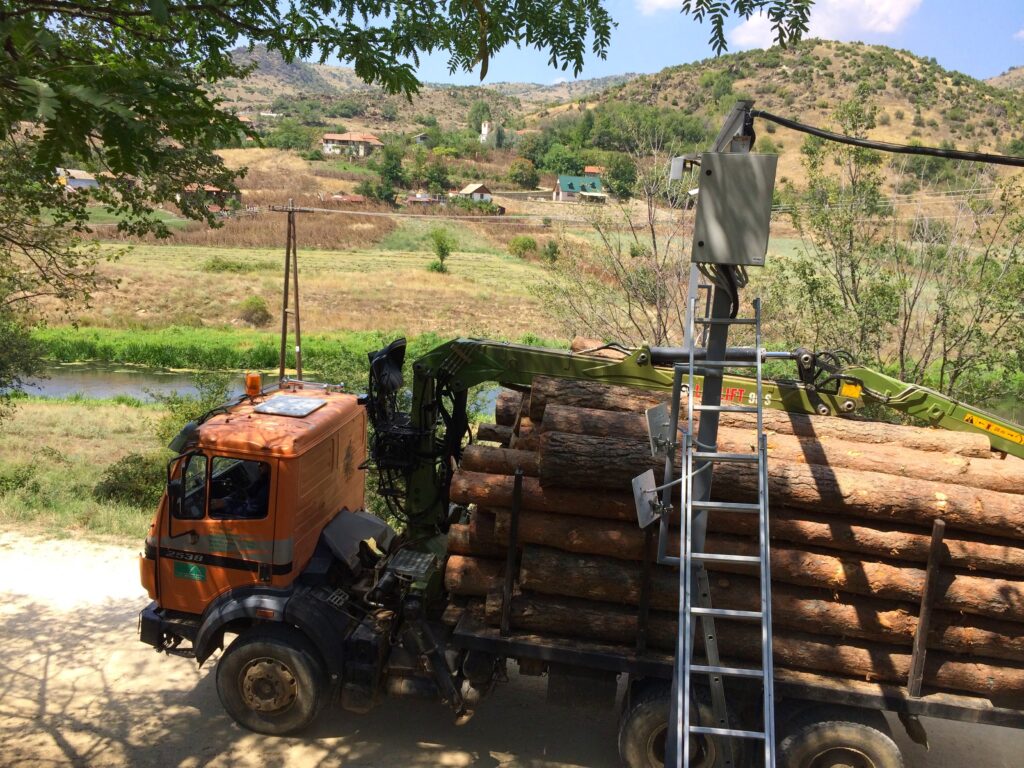
Project funded by Greece – The Former Yugoslav Republic of Macedonia IPA Cross Border Programme 2007-2013 Role in the project: subcontractor Period of implementation: 2013-2014 Illegal logging and the cross-border trade in illegally logged timber is currently a major concern among all countries worldwide. Based on World Wide Fund for Nature (WWF) data, the share of illegal logging is estimated at 20% to 40% of the total global industrial wood production, while the annual global market value of losses from illegal cutting of forests is over US$10 billion. Illegal logging and trade has a multi-dimensional impact, ranging from environmental damage,…
The objective of this study is to analyze urban economic development as a tool for creating opportunities for starting new businesses in the Municipality of Bitola. Activities for study preparation included: Developing a research methodology for the Bitola market research, which consisted of a desk review and a field survey. Analyze the existing data and studies about the local labor market to identify data that should be updated. Prepare a questionnaire for the field research to examine the services that exist or are lacking in the municipality of Bitola. Conduct a field survey (field research) with two hundred interviewees. Enter…